Rise of Smart Factory in today’s Digital World – What Impact & Benefits it brings for Manufacturing Industries?

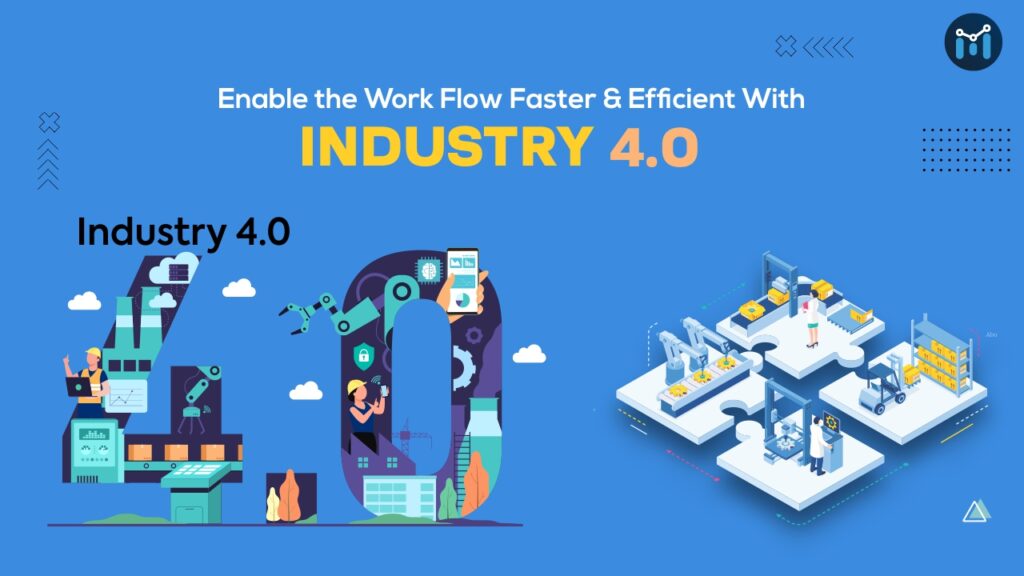
Digital automation is re-shaping every industry and it is prevalent more than ever in the manufacturing industry in today’s times. Smart factory or Industry 4.0 is an aspect that brings the integration of cutting-edge technologies within a factory setting, creating intelligent factory automation that enables work-flow much cleverer, faster and efficient than traditional work process. It brings about a change of evolving intelligent process in manufacturing with huge benefit potential. What is a smart factory? How is it impacting the manufacturing industries across the globe? Let’s discuss in detail.
Smart technologies are not just a trend in our personal life, but commercial and industrial sectors are also embracing this as well. As per Smart Manufacturing Leadership Coalition (SMLC), smart manufacturing is – “the ability to solve existing and future problems via an open infrastructure that allows solutions to be implemented at the speed of business while creating advantaged value.”
In simple words anything within a manufacturing process that’s intelligent, leverages digital connectivity and utilizes real-time data access for overall enhancement of process is called Smart Manufacturing.
Smart Manufacturing – Leading to Rise of Industry 4.0
This new concept within the manufacturing space is also termed as Industry 4.0 or 4th Industrial Revolution. Unlike the traditional methods of relying on the physical data and manual process altogether, manufacturers are now leveraging cloud technology to store, process, refine and access data that impacts their manufacturing cycle, including the supply chain. This has given birth to Smart Factory that works entirely on the technological lines and digital spectrum.
What is a Smart Factory?
Smart factory is what smart manufacturing delivers in an industrial set-up. It is not just an improved process from what were used earlier, but steps ahead for their process implementation, supply chain, and operational and financial management. Why is it called smart? Because manufacturers now have large chunks of refined data that earlier they were unable to access or analyses because of lack of a systematic process in place. Smart factory is one which has data and a structure to efficiently analyses and make efficient decisions.
- A smart factory relies on a fully connected system to constantly stream up-to-date data, specific to their industry, easily and fast.
- A smart factory leverages cloud technology, with the process in place to be able to learn more efficiently and adapt to growing and changing market needs and demands.
- The two cores of factory automation in a smart setting – Operations Technology and Information Technology have enabled transformation of supply chain process – Open and interconnected from the traditional sequential and linear operation process.
What smart factory can do, can be assessed with the fact that it has the power to drive the overall factory process, physically and digitally, resulting in:
- A highly efficient and responsive manufacturing system in place
- Reduction in production process time and cost
- Prediction of and adjustment to required changes in time
- Reduction in Downtime, higher Productivity and enhancement in Quality
What Technologies a Smart Factory Make Use Of?
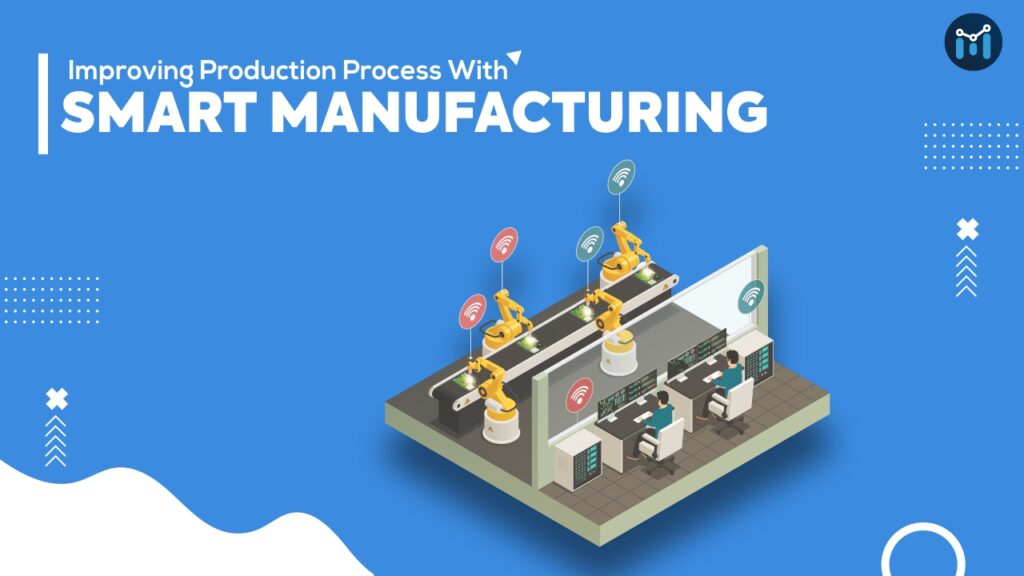
A smart factory takes shape based on the intent of a professionally agile and knowledgeable workforce which incorporates technologies with the tools. Thus, bringing in a refined process of control, analysis and method-implementation. There are several technologies that create the digital infrastructure of a smart factory as appended below:
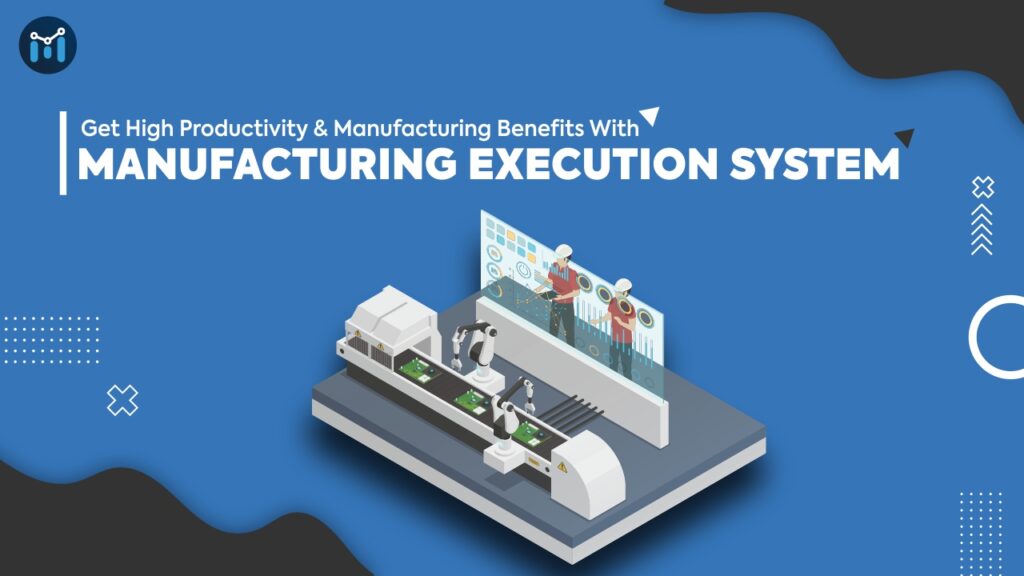
- Cloud Tech – Storage and centralized access of large chunks of data that is gathered, processed and updated, through tools like Enterprise Resource Planning (ERP) and MES (Manufacturing Execution System).
- Machine Learning – Factory automation in the smart setting is going to be as effective as the communication between machines is.
- Internet of Things (IoT) – Coordination, capturing and exchange of data between systems, and also the control over different processes like production is what IoT will bring forth in order.
- Sensor technology / Intelligent Monitoring System – A data-driven digital network implementation won’t yield maximum results if it isn’t monitored well for assessing the entire process. With no monitoring in process you won’t know if the workflow is being managed well or not. A high-end quality intelligent monitoring system based on sensor tech helps supervise the entire cycle chain. It keeps you up to date with what is happening throughout the factory, alerts if there is a deviation from workflow, keeps a tab on workers shift, observes ‘changeovers’, and thoroughly monitors the machine utilization.
- Big Data – With a large volume of accessible data, Big Data process is what would collect and analyse the data, identify the information pattern, and also reduce the occurrence of future events.
- Autonomous Robots– Tasks that are repetitive and take too much of unnecessary time, tasks that require high accuracy can be handled with the implementation of an autonomous or a cognitive robot.
- Cybersecurity – As much as the focus is on the data analysis, operational and supply flow using digital tools and process, the large amount of data over the network is also susceptible to security risk. Thereby, in a smart factory to work smooth and risk-free you have to envisage the security aspect for both process and components.
In pretext to above information our blog on Make Manufacturing More Intelligent and Smart with IoT will help more in understanding IoT in factories.
Why Smart Factory Matters So Much?
The digital network that has given birth to the concept of ‘Smart Factory’ is based on machine-to-machine communication. And this is where technologies like Artificial Intelligence (AI) and Internet of Things (IoT) come into play. These technologies are gaining traction across all industrial sectors, and manufacturing is also one of them.
Allied Market Research’s published report on Global Opportunity Analysis and Industry Forecast predicts that global IoT in manufacturing sector will reach $994 billion by 2023. And this is concrete evidence that Smart Factory is going to be the key aspect in the manufacturing sector in near future. Growing percentage of transition of manufacturing industries from traditional process to smart factory automation validates that.
Scope for Smart Factory – Leveraging Digital Supply Network
A smart factory provides a high scope for agility, augmentation and improvement, which can be achieved by exploring the capabilities:
- Vertical integration – Through interconnected manufacturing systems; connections between production and all other divisions of manufacturing organization
- Horizontal integration – Through numerous operational systems; it ensures engineering process, machinery and IoT devices bind and work together seamlessly
- End-to-End integration – Through overall value chain; integration of data from system-wide operational, physical and human assets
Working through the entire integration of human, operational and physical assets, a smart factory enables to drive high value not just within the manufacturing setting but also the supply chain process.
4-Step Plan to Transform Your Manufacturing Unit to a Smart Factory
- Accept the Need for Change – Digitally interconnected is becoming a needful aspect for every industrial and commercial process and one should be up to change, adapt, implement and drive accordingly.
- Draft Objectives and Strategies – What objective one is looking to gain with their factory transformation? What specific strategies you are going to put in place for getting the desired result? How much it is going to impact your current process in place, your workforce and your sales and marketplace? These are necessary steps to evaluate, and to work upon to address the requisite change.
- Plan Your Digital Infrastructure –Intelligent Monitoring System, Manufacturing Execution System (MES) deployment, creation of interconnected network and machines, and integration of other technologies; these are the key aspects of digital transformation. . Acquire the tools and technologies with a research-based process. A professional and expert digital transformation agency will help in successful, smooth, seamless and effective transition to Industry 4.0.
- Define the Team – For digital transformation, one needs a team of specialists well aware of what has to be done. An expert that can lead the project is a critical and important aspect for a factory owner. They also needed to be trained thoroughly for this. Assess and gather the workforce and to implement and oversee the entire process execution.
Potential Benefits of a Smart Factory for a Manufacturer
Any industry that utilizes and leverages digitalization in an effective, strategized way is going to benefit a lot. And same holds true for a manufacturing unit, with potential benefits such as:
- Monitored Process Throughout
How the system is working throughout? How the workforce is handling their job duties? Allocation of resources, roles specific to the task, and everything else; the entire manufacturing process is seamlessly monitored.
- High Productivity
Reduced downtime, error-free production process, smart inventory management, quality improvement, reduced events, and seamless supply chain within a smart factory setting result in obtaining higher productivity.
- Low Expenditure – High Quality
Increased productivity always results in reduced time loss, and also saves on costs. These savings can be further invested in the production process for re-imagining of products of a higher quality.
- Analysis-Based, Data-Driven Decision Making
Data based decision making for Production Planning, Operator Shift Allocation, Resource Management, Hiring New Staff, Employing Marketing Campaigns, and Deploying Supply Chain Process gives manufacturers better results and efficient utilization. These in turn yield better profitability.
- Expansion
Manufacturers can expand production capacities and gain market share without significant capital expenditure in procuring new capital goods such as machinery or expanding factories. Rather they can enhance the utilization of existing capacities for such endeavors.
- Create More Jobs
An improved productivity, expansion possibility will mean you are able to create more scope for jobs. Also, a smart factory is able to attract young and tech-savvy workforce on to the mix which will bring a fresh lease of work culture, idea input and creative involvement.
- Scalability
A smart factory works on the principle of agility and flexibility. This means you are always up for any scalable requirement pertaining to the market requirement. Risk mitigation is there, and speed in process upgrade and transformation is there in the face of any unexpected event.
- Remote Access
Remote access has gained a high significance in the present Covid Pandemic time. A smart factory works on an interconnected system. Leveraging cloud technology supervisors and management can keep track each and every aspect with seamless remote access.
Also, have a look into our blog on Key Metrices to Improve Shop Floor Performance, which will give more knowledge on shop floor in factories.
Conclusion: –
Digital infrastructure is the key for today and tomorrow’s business set-up across all sectors and segments. If you want to remain competitive you can’t afford to ignore the knocking changes. Rather than being sceptical or worried about such a transformative move, you should focus on what a smart factory can bring for your business desires, and how you can respond and adapt to this with key and strategic integration in place.